Los Angeles, CA, April 03, 2026 (GLOBE NEWSWIRE) -- This content contains affiliate links. If a purchase is made through these links, a commission may be earned at no additional cost to the buyer. This is an informational overview and does not constitute medical, health, or dietary advice. Dietary supplements are not intended to diagnose, treat, cure, or prevent any disease. All product details described below are stated as presented by the company and should be verified directly on the official website before any purchasing decision.
Where this overview references "effectiveness" or "results," those terms describe how ColonBroom's product information presents potential outcomes or how publicly available ingredient-level research characterizes findings under controlled study conditions. They do not indicate that ColonBroom as a finished proprietary formula has been independently proven effective through a published clinical trial of the product itself.
ColonBroom, a fiber-based supplement formulated around psyllium husk, has product information available on its official website outlining the ingredient composition, usage structure, and intended role in digestive and weight-management routines. If you've been seeing ColonBroom across social media or wellness content and want to understand what's actually behind the formula — what the ingredients are, what the research says about psyllium fiber, and how the dosing compares to what published studies have used — this overview presents product information from the company alongside publicly available research on psyllium fiber to provide additional context on how the formulation is described and how fiber supplementation is discussed in existing literature.
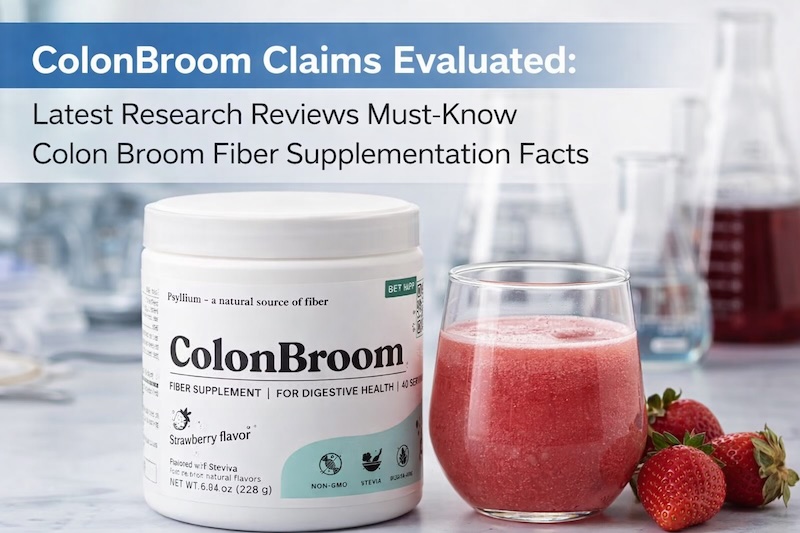
Current product details and availability can be reviewed by viewing the current ColonBroom offer (official ColonBroom page).
Individual results vary. Dietary supplements are not substitutes for balanced nutrition, regular physical activity, or professional medical guidance. Consult a qualified healthcare provider before starting any new supplement regimen.
What Is ColonBroom
ColonBroom is a dietary fiber supplement built around psyllium husk powder as its primary active ingredient. According to the company's product information, the formula is designed to support digestive regularity, reduce bloating, and assist with weight management when used as part of a balanced lifestyle. The product comes as a flavored powder that users mix with water, and the company recommends two scoops per day — one before breakfast and one before dinner.
The Supplement Facts panel lists the following per one-scoop serving (approximately 5.7g): 20 calories, 4g total carbohydrate, 3g dietary fiber (including 2g soluble fiber), 60mg sodium, and 3.6g psyllium husk powder. Other ingredients include natural flavor, citric acid, crystallized lemon, stevia leaf extract, sea salt, fruit and vegetable juice for color, and rice hulls.
At the recommended two-scoop daily dosage, consumers would take in approximately 7.2g of psyllium husk powder, 6g of dietary fiber (including 4g soluble fiber), and 40 calories per day from the supplement.
The company positions ColonBroom with several claims visible on its sales pages, including references to customer counts, weight loss percentages among users, clinical backing, and dietologist approval. These are the company's marketing statements. The sections below present publicly available research on psyllium fiber to provide additional context for anyone considering the product.
Publicly Available Research on Psyllium Husk Fiber
Psyllium husk, derived from the seeds of Plantago ovata, is one of the most extensively studied dietary fibers in the scientific literature. Unlike many supplement ingredients where research is limited, psyllium has a substantial body of peer-reviewed evidence across multiple health outcomes. Understanding this research — including where it's strong and where gaps remain — is useful context for anyone looking at a psyllium-based product.
How psyllium works mechanistically. Psyllium is a predominantly soluble fiber that forms a viscous, cross-linked gel when hydrated. This gel is not digested or fermented as it moves through the gastrointestinal tract. In the small intestine, the gel increases chyme viscosity, which slows the degradation and absorption of nutrients. According to a 2021 overview in Nutrition Today, this mechanism drives several of psyllium's documented health effects: it slows glucose absorption (supporting blood sugar management), delays hunger signals (supporting satiety), and interferes with bile acid reuptake (supporting cholesterol reduction).
Weight management research — the positive findings. A 2023 meta-analysis in the Journal of the American Association of Nurse Practitioners (Gibb et al.) examined six randomized controlled trials in overweight and obese participants. The analysis found that psyllium dosed before meals at a mean of approximately 10.8g per day over a mean duration of roughly 4.8 months produced statistically significant reductions in body weight, BMI, and waist circumference compared to placebo groups.
A transparency note worth knowing about this study: the authors disclosed that they are employees of Procter & Gamble, which manufactures Metamucil, a psyllium-containing product. This does not automatically invalidate the findings — the meta-analysis reviewed independently conducted trials — but it is worth factoring into how you weigh the evidence.
Weight management research — the nuanced findings. A more recent 2025 systematic review and dose-response meta-analysis in the Journal of Health, Population and Nutrition (Gholami & Paknahad) examined 27 randomized controlled trials on psyllium's effects on body measurements in adults. This broader analysis, which included diverse study populations beyond just overweight and obese participants, found mixed results: the pooled data showed a statistically significant increase in body weight across all included studies, while changes in BMI, waist circumference, and waist-to-hip ratio were not statistically significant.
What does this mean in practical terms? Psyllium's effects on body weight appear to depend substantially on the population studied, the dosing protocol, and whether the supplement is taken before meals. The targeted 2023 analysis in overweight and obese populations found weight loss benefits, while the broader 2025 analysis across diverse populations found less consistent results.
Digestive health research. The evidence base for psyllium's effects on digestive function is more consistently positive. Publicly available research notes that psyllium has a documented "stool-normalizing" effect — it can soften hard stool in constipation while firming loose stool in diarrhea. The American College of Gastroenterology has recognized psyllium as a management option for irritable bowel syndrome (IBS) symptoms, and multiple trials have documented improvements in stool quality, frequency, and digestive comfort with regular psyllium supplementation.
Cardiovascular and metabolic research. Published meta-analyses have also documented psyllium's effects on cholesterol levels and glycemic control, showing meaningful reductions in LDL cholesterol and improvements in fasting blood glucose in patients with type 2 diabetes.
These are ingredient-level research findings based on publicly available studies. ColonBroom as a finished product has not been independently tested through a published clinical trial to confirm these outcomes at the specific dosage the formula delivers.
Dosing Context: What Research Used vs. What ColonBroom Delivers
One of the most useful comparisons anyone can make when considering a fiber supplement is how the product's per-serving dosage stacks up against what the published research actually used.
The 2023 Gibb et al. meta-analysis that found weight loss benefits used a mean psyllium dose of approximately 10.8g per day, taken in divided doses before meals over roughly 4.8 months. Research on digestive benefits has typically used daily doses in the range of 5g to 25g, depending on the condition studied. Research on cholesterol reduction has commonly used dosages in the range of approximately 7g to 15g per day.
ColonBroom delivers 3.6g of psyllium husk powder per scoop. At the recommended two scoops per day, that totals 7.2g of psyllium husk powder daily. This places ColonBroom's daily psyllium delivery within the range studied for digestive benefits and cholesterol effects, but below the mean dosage that produced statistically significant weight loss in the Gibb et al. meta-analysis.
That doesn't mean ColonBroom cannot support weight management efforts. It means that if you're specifically interested in the weight-related research, the dosing gap between what studies used and what this product delivers is worth factoring into your expectations. Psyllium's satiety effects — the gel expanding in the stomach and slowing digestion — are dose-dependent, and lower doses may produce proportionally different outcomes.
Understanding ColonBroom's Positioning
ColonBroom's product claims are presented here alongside relevant research context on dietary fiber to provide additional perspective on how the company positions the product.
Regarding customer count and satisfaction claims. The company's website references specific customer counts and satisfaction percentages. These represent the company's stated data. The methodology behind these numbers is not disclosed on the website.
Regarding weight loss percentage claims. The website references a specific percentage of users who recorded weight loss. The methodology — including data collection methods, timeframes, and variable controls — is not detailed. This figure represents the company's marketing positioning.
Regarding "clinically backed" positioning. Psyllium husk as an ingredient does have substantial clinical research, as outlined in the sections above. However, "clinically backed" applied to an ingredient isn't the same as "clinically tested" applied to a finished product. No published clinical trial appears to have tested ColonBroom's specific formula as a finished product.
Regarding timeline expectations. The company's website presents a timeline of what consumers might experience over weeks and months. Publicly available research on psyllium suggests digestive effects can begin within 24 to 72 hours, but broader timelines for weight management represent the company's stated expectations. Individual timelines vary based on many factors.
ColonBroom vs. ColonBroom Premium
The company also markets a separate product called ColonBroom Premium, which includes additional ingredients such as L-carnitine, capsimax, chromium, and vitamins B6 and B12 alongside psyllium husk. These are different formulations with different ingredient profiles and pricing. This overview focuses on the standard ColonBroom psyllium husk fiber formula.
When Consumers Typically Explore Fiber Supplements Like ColonBroom
Consumer interest in fiber supplements like ColonBroom often comes from individuals looking to:
Increase daily fiber intake through a convenient format. According to publicly available nutritional data, most adults in the United States consume significantly less fiber than the recommended daily intake. ColonBroom's two-scoop serving provides approximately 6g of dietary fiber, which can help bridge part of this gap when combined with dietary sources.
Find digestive regularity support. Psyllium husk has one of the strongest evidence bases among fiber types for supporting regular bowel movements, reducing bloating, and improving stool consistency. For anyone whose primary concern is digestive comfort, the publicly available research supports this use case for psyllium as an ingredient.
Try a flavored, mixable supplement instead of capsules or unflavored powders. Consistency with fiber supplementation often depends on palatability. If previous fiber supplements were difficult to stick with because of taste or texture, a flavored format may improve daily compliance.
Combine supplementation with broader lifestyle factors. Publicly available research on psyllium and weight management consistently shows better outcomes when fiber supplementation is combined with balanced nutrition and physical activity rather than used as a standalone approach.
Other approaches may be worth considering for those who:
Expect rapid, significant weight loss from a supplement alone. The research at the dosages studied shows modest weight changes over multiple months. If your primary goal is substantial weight loss, professional medical guidance and comprehensive lifestyle changes will likely produce more meaningful outcomes than any fiber supplement on its own.
Prefer full dosage transparency and higher psyllium concentrations. Consumers who want psyllium dosages closer to the mean used in weight-loss research (approximately 10.8g per day) may find that unflavored psyllium husk powder allows for more flexible, higher dosing at a lower per-gram cost.
Have specific medical conditions requiring clinical supervision. Psyllium can interact with certain medications by affecting absorption rates. Anyone taking prescription medications — particularly for diabetes, blood pressure, or cholesterol — should consult their healthcare provider before adding a psyllium supplement.
Questions to consider before choosing a fiber supplement:
Is your primary goal digestive regularity, weight management support, or both? What is your current daily fiber intake from food sources? Are you willing to commit to consistent daily use for multiple months? Have you discussed fiber supplementation with your healthcare provider, especially if you take medications? Does the psyllium amount per serving align with your goals based on what publicly available research has used?
These questions can help clarify whether ColonBroom's specific formulation matches your situation. Additional publicly available discussions of fiber supplementation and weight management are widely accessible through major health and nutrition publications.
Full product details can be confirmed by viewing the current ColonBroom offer (official ColonBroom page).
Product Availability Information
According to product information on the official website at the time of this overview, ColonBroom is available in multiple package formats, including subscription and one-time purchase options. Pricing, package structure, and promotional terms may vary over time. Readers are encouraged to verify the most current details directly through the official ColonBroom website.
Current availability and terms can be confirmed by viewing the current ColonBroom offer (official ColonBroom page).
Refund and Guarantee Information
According to the company, ColonBroom orders are described as being protected by a money-back guarantee. The specific terms, timeframes, and conditions should be reviewed directly on the official website before ordering, as guarantee details are subject to the company's current terms and conditions.
Common Questions About ColonBroom
Is ColonBroom FDA approved? ColonBroom is a dietary supplement. Under current federal regulations, dietary supplements do not require FDA approval before being sold. The FDA does not evaluate supplement efficacy claims before products reach the market.
Does psyllium husk actually help with weight loss? Published meta-analyses show mixed results depending on the population and dosage. Research in overweight and obese participants using approximately 10.8g per day before meals found statistically significant weight reduction. ColonBroom delivers approximately 7.2g per day — below the mean used in that positive research.
How long does ColonBroom take to show digestive effects? Publicly available research suggests that psyllium's effects on bowel regularity can begin within approximately 24 to 72 hours. The company's website describes an initial adjustment period during the first week where temporary bloating may occur as the body adapts to increased fiber intake.
Can I take ColonBroom while intermittent fasting? According to the company's FAQ, ColonBroom can be used during intermittent fasting. However, the product contains 20 calories per scoop — whether this aligns with your specific fasting protocol depends on your individual approach.
Are there side effects? Published literature indicates that psyllium is generally well tolerated at recommended dosages with adequate water. Common initial effects can include bloating, gas, or mild digestive discomfort, which typically subside as the gut adapts. Adequate water intake is important. Anyone taking prescription medications should consult a healthcare provider, as psyllium can affect the absorption rates of certain drugs.
Additional Resources
Previously available information on ColonBroom can be found for further context. A 2025 overview covered ColonBroom's psyllium husk formula and digestive health positioning. Additional publicly available discussions of fiber supplementation and weight management are widely accessible through major health and nutrition publications.
Summary
ColonBroom is a dietary supplement built around psyllium husk, one of the most extensively researched dietary fibers in the scientific literature. Publicly available research supports psyllium's role in digestive regularity and cholesterol reduction. Evidence related to weight management exists but is nuanced — positive findings come from studies using higher daily doses than what ColonBroom delivers, and broader analyses show mixed results depending on the population studied.
Complete product details, current availability, and terms can be confirmed by viewing the current ColonBroom offer (official ColonBroom page).
Contact Information
For questions before or during the ordering process:
Email: hello@colonbroom.com
Phone: +37065931068
Disclaimers
FDA Health Disclaimer: These statements have not been evaluated by the Food and Drug Administration. This product is not intended to diagnose, treat, cure, or prevent any disease. Always consult your physician before starting any new supplement, especially if you have existing health conditions, take medications, or are pregnant or nursing.
Professional Medical Disclaimer: This content is educational and does not constitute medical advice. ColonBroom is a dietary supplement, not a medication. If you are currently taking medications, have existing health conditions, are pregnant or nursing, or are considering any major changes to your health regimen, consult your physician before starting ColonBroom or any new supplement. Do not change, adjust, or discontinue any medications or prescribed treatments without your physician's guidance and approval.
Results May Vary: Individual results will vary based on factors including age, baseline health condition, dietary habits, consistency of use, genetic factors, current medications, physical activity levels, and other individual variables. While some customers report improvements, results are not guaranteed. Ingredient research describes outcomes observed under specific controlled study conditions that may not reflect individual consumer experiences.
FTC Affiliate Disclosure: This content contains affiliate links. If a purchase is made through these links, a commission may be earned at no additional cost to the buyer. This compensation does not influence the accuracy, neutrality, or integrity of the information presented. All descriptions are based on publicly available research and information.
Pricing Disclaimer: All pricing, promotional offers, and subscription terms referenced were based on publicly available information at the time of writing (April 2026) and are subject to change without notice. Always verify current pricing and terms on the official ColonBroom website before making a purchase.
Publisher Responsibility Disclaimer: Every effort has been made to ensure accuracy at the time of writing. Responsibility is not accepted for errors, omissions, or outcomes resulting from the use of the information provided. Readers are encouraged to verify all details directly with ColonBroom and their healthcare provider before making decisions.
Ingredient Research Notice: The studies referenced in this overview examined psyllium husk as an isolated ingredient under controlled research conditions at specific dosages. These studies did not test ColonBroom as a finished proprietary formula. Ingredient-level research findings should not be interpreted as product-level clinical proof for ColonBroom or any specific psyllium-based supplement.

Email: hello@colonbroom.com Phone: +37065931068